Two Cops, One Unbreakable Will to Survive
October 1 is more than just a day on the calendar. For thousands of people, it is a day that changed their lives forever. On Sunday, October 1, 2017, the Route 91 Harvest Festival was taking place on the world-famous Las Vegas Strip across from the Mandalay Bay Resort. It was also the scene of the deadliest mass shooting by a single gunman in American history. For 11 straight minutes, a savage fired an estimated 1,000 rounds from a hotel room on the 32nd floor of the Mandalay Bay Hotel towards the festival, ultimately killing 60 and injuring another 800 people. There are thousands of stories from that night. Many are tragic, many more are heroic, and some are unexplainable.
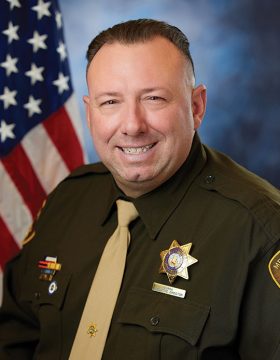
This story is specifically about two cops and their experience that fateful evening. This story is about a rookie police officer fresh out of the academy, his Field Training Officer (FTO), and their story of survival.
Brady Cook is a second-generation Las Vegas Metro cop. His father, Matt, hired on in 2003 when Brady was only 8 years old. Brady knew early on that he wanted to be a police officer, more specifically a SWAT operator. Be it from his father, his uncle who was also a cop, or his desire to help others and give back to the community he grew up in, Brady could not wait until he turned 21 years old so he could hire on with Metro and eventually earn a spot in that coveted unit.
When Brady turned 21 years old, he did exactly what he had his sights set on. He tested for Metro, was hired, and began the police academy in March of 2017. After graduating from the academy in late September, he was assigned to a swing shift squad at the Convention Center Area Command (CCAC) for his first segment of field training. CCAC is the patrol station responsible for policing what the world knows as the "Las Vegas Strip."
After completing a week of administrative training, Brady reported to CCAC for his first patrol shift, where he met for the first time his FTO, Josh Haynes.
Josh Haynes grew up in Oregon. At the age of 17, he asked his mother to sign a waiver allowing him to enlist in the United States Army, and she did. Josh soon found himself in Ft. Benning, Georgia, as an infantryman, ultimately serving our nation for over six years. After leaving the Army, Josh earned a degree in computer science and became a network engineer in the hospital industry.
That career field did not hold his interest, though. He eventually began training to get back into shape, and that took on a life of its own. Josh began amateur fighting. And it turned out he was pretty good at it. Winning over 11 fights as an amateur, he was hooked. In 2005, Josh tried out for and was selected to be a participant in Season 3 of the UFC's The Ultimate Fighter. The TUF series then led to a career in the UFC, where he fought for several years.
Josh eventually moved to Las Vegas to train and work at Extreme Couture. But like Brady, Josh always wanted to be a police officer. It was a chance encounter that led him down the path to fulfilling that dream. While living in Vegas, Josh was involved in a car wreck. The motor officer who responded spoke to him about the career field and encouraged him to test. Josh went on a ride-along and was hooked. He hired on with Las Vegas Metro in 2009. After years of working in nearly every area command in the valley, Josh settled in at CCAC, where he became an FTO.
On Saturday, September 30, while Brady was navigating through his first shift, his father was working overtime at the Route 91 Harvest Festival. Josh recognized the significance of this day and suggested he and Brady make a quick stop at the event so Matt could say hi to his son on his first day as a cop. After a quick conversation and a photograph of a father and son to memorialize the momentous occasion, Josh and Brady were off. As they left the event that evening, they had no idea that in 24 hours they would be back there fighting for their lives.
The remainder of their first shift went off without a hitch. In the early morning hours of October 1, 2017, Police Officer Brady Cook changed out of his uniform back into his civilian clothes and drove home, completing his first shift as a police officer with Las Vegas Metro.
Brady began day two of his police career on Sunday, October 1, 2017. Swing shift briefing at CCAC was completed, and the two headed out to their Crown Vic to log on and hit the streets. The afternoon was steady, and they stayed busy handling calls for service. As lunchtime approached late into the shift, they both decided to skip the meal and opted to do some foot patrol on the Strip. Josh and Brady parked their sled at the Flamingo Circle and waited for another officer to join them. As they were preparing to walk, the radio erupted with reports of an active shooter at the Route 91 Harvest Festival.
They jumped back in their Crown Vic. With Josh driving, they worked their way through the standstill traffic that usually accompanies a Sunday evening on the Strip. With approximately 16 or 17 hours under his belt as a cop, Brady's first Code 3 run would be to what was later identified as the deadliest mass shooting in American history. Brady said for a flash, he had the thought, "Is this real, is this legit?" As quickly as that thought entered his mind, it left as he listened to updates on the radio describing the carnage that was taking place at the location he and Josh were racing towards.
The radio traffic was unreal. Reports of chaos and multiple victims down with gunshot wounds. As quickly as they were trying to process the information coming in, they passed the area of Las Vegas Boulevard in front of the Luxor. It was at that point there was no mistaking what was going on. As they approached the Luxor, they could hear the gunfire. What sounded like fully automatic machine gun fire was echoing off the buildings in the area. They had no idea where the gunfire was originating from, nor did they know how many shooters were in play.
As they arrived at Mandalay Bay and LVBLVD, they saw multiple patrol cars already staged. Josh parked their car, and they got out with the intent of gearing up and moving into the venue to hunt down and neutralize the shooter(s).
As soon as they exited their patrol car, unbeknownst to them, the shooter, perched in a room on the 32nd floor of a suite in Mandalay Bay, shifted his attention towards them. The shooter rained down effective rifle fire on their position, hammering the patrol cars. This group of officers were crouching down, seeking whatever cover their cars would afford them. They could see bullets impacting the ground, light poles, and the sidewalk around them. With no viable position to displace to and no way to fight back, the cops hunkered down behind their patrol cars were in an untenable position. They eventually deduced that the gunfire directed at them was coming from one direction and an elevated position, but they could still not pinpoint exactly where from.
As they were attempting to gain situational awareness and dodge incoming rifle fire, bullets were drilling into their patrol cars. Like an angry, invisible hole puncher, bullets indiscriminately rained down onto their Crown Vic. The sound of machine gun fire, frantic radio traffic, and bullets impacting all around them reinforced the notion that every decision they made and every step they took was the difference between living and dying. They attempted to broadcast radio traffic; however, the radio channel was overwhelmed with cops, all of whom were attempting to do the same thing at the same time.
At one point, Brady's right arm just "stopped working." The reason being that he had been shot. One of the thousand rounds fired that night hit him. Although he never felt a thing, he knew he was shot. He recognized that by the fact that his right arm was not responding to what his mind was telling it to do. Simply put, his right arm was now dead. To make matters worse, he was bleeding heavily from his right side. Brady yelled out to Josh that he had been shot.
At that moment, Josh was living out the absolute worst-case nightmare scenario of any FTO: being tactically disadvantaged in a gunfight during an active shooter event while your trainee sustained a life-threatening gunshot wound. What neither Josh nor Brady fully understood at that moment was that the .223 round had entered the outside of Brady's right shoulder, traveling through his arm, narrowly missing a major artery by a millimeter, and blowing out and exiting the inside of his arm near the armpit. At that moment, they did not realize that the same round that exited his armpit entered his right chest and traveled downward.
What Josh did know was that if his trainee, his new kid, the rookie officer he was responsible for, had any chance of surviving that night, he had to get him out of that kill box and get him to UMC Trauma. Josh looked for a potential exit route. Approximately 100 yards north of their position was a bus parked on the road. That was it. Josh grabbed onto Brady, pointed him north, and they ran for it. They ran towards the bus as fast as they could. It seemed as if the shooter knew exactly what their plan was. The savage, perched in his room, saw Josh and Brady make a run for it and did not allow them to go unmolested. Bullets tracked them as they ran, with rounds impacting the street all around them. Josh said he pushed Brady in front of him, anticipating that they were going to get shot and hoping he may catch a round before his trainee did.
As the two approached the bus, their hopes of having some form of cover/concealment quickly faded. No sooner had they made it to their new position of cover than it disappeared. The bus drove away, leaving them right back where they started. Josh and Brady had no idea how they were not shot during that run to the bus. Rounds were impacting all around them, and it seemed impossible that they would make it unscathed, but they did. Seeing the bus drive away at the last moment just added insult to injury.
At some point, they found a defilade and stopped. Josh ripped open Brady's uniform shirt, exposing a massive hole on the inside of his armpit. Then he saw it: the entry wound into Brady's chest. He knew time was critical and he had to get Brady to the hospital.
Up to this point, Brady had not complained once. He never even said it hurt, which was perplexing, as Brady's right side was covered in blood. Josh said he believed Brady would have just stayed where they were and kept working if he had not made them move towards the bus.
Josh saw another patrol car parked north of their new position. They had to make one more run for it. As they arrived at what would be their new ride, Josh yelled out to the cops taking cover behind the black-and-white, asking them who the car belonged to. None of them knew. After a one-sided conversation, Josh took possession of his new sled and threw their shotguns and gear in the back while Brady got into the passenger seat, and they were off.
The ride to UMC Trauma was as intense as you could envision. It was fast. As they were driving towards the hospital, they could see a wave of emergency vehicles rolling code going towards the venue. Josh was driving while Brady was attempting to place a tourniquet on his arm. The massive amount of blood on his shirt made it slippery and difficult to apply. Josh was navigating his way to trauma while trying to make sure Brady did not pass out or lose consciousness. Josh attempted to broadcast radio traffic while en route so that UMC Trauma would be ready for them. But like before, there were so many people trying to use the radio he could not transmit.
When they pulled into the hospital, the staff had no idea what was going on just a few miles away. Josh got his trainee into the ER and told the staff what was occurring and to get ready. It wasn't until Brady was on a hospital gurney that the pain registered. With his uniform shirt stripped off, he glanced up at the exit wound near his armpit and could see through the hole in his arm.
Within minutes, the trauma center erupted. The room went from being a sterile, clean, calm environment to one of chaos, with blood all over the floor and nurses and doctors fighting to keep people alive. Brady was eventually stabilized and watched as the victims continued to come in. It was at that point the magnitude of what had occurred that night began to set in.
As Brady was being tended to by the medical staff, Josh called Matt and delivered the news no parent wanted to hear. The next couple of days were a blur. President Donald Trump and First Lady Melania Trump arrived in Las Vegas and stopped by UMC. They walked into Brady's room, closed the door, and spent some time visiting with Brady and his family. Brady said the experience was genuine. It was very personal, and before leaving, both the president and first lady hugged him and wished him well.
For Brady, the next six to seven months were busy with rehabilitation and physical therapy. He lost over 40 pounds. Multiple times per day, nurses had to clean the open wounds and repack them with gauze. He estimated that it took approximately six months to regain feeling and strength in his arm.
Eventually, Brady was ready for day three. After seven months, he reported back to CCAC. Back to the same squad on the same shift. But this shift would be a little different. In the time that Brady had been off rehabbing his arm, Josh left CCAC. After several years of being an FTO, Josh tested for detective. During the time Brady was getting better, Josh was promoted and transferred to Spring Valley Area Command.
Brady went on to complete field training. After working patrol at the Enterprise, Bolden, and Northwest Area Commands, as well as the Homeland Saturation Team and Counterterrorism, Brady finally had the opportunity to test for the job he wanted since he was a kid. Today, Brady is a member of the most elite Special Weapons and Tactics units in the United States, Las Vegas Metro SWAT. When asked how it felt to get the call to SWAT, he said that he is extremely proud to work in that unit. He said that this is a position you earn every day and that every single day he reports to work with the goal of being the best teammate possible.
I asked Brady if he had any advice for new officers. He jokingly stated that when this happened, he didn't even know how to write a ticket yet. But regardless of your position or tenure, you get to decide whether or not you have a positive mindset. He said that every cop must know this type of event can happen on your second day or your 20th year on the job, and the world does not owe you a grace period. He said, "Don't be soft," and that he will never allow the savage who shot him to define the remainder of his life. He always wanted to do this job, and that night he was right where he needed to be.
For Josh Haynes, well, he remained a detective for several years. Recently, he tested for and was promoted to the rank of sergeant. He works at the South-Central Area Command, where he oversees a graveyard squad. Josh went from mentoring one individual at a time to mentoring an entire squad. His goal is to leave this department better than he found it. One way is to implement a department-wide program that allows officers to train in jiu-jitsu consistently at their respective area commands.
For someone who is a professional at inflicting physical violence upon the person of another, Josh has never had a significant incident where he has had to do that as a street cop. He credits this to his proficiency in jiu-jitsu. Josh explained that this skill has allowed him to keep his brain from moving too fast and making bad or impulsive choices when dealing with confrontational people.
I asked Josh what some of his key takeaways from that night were. Josh was insistent that landing their patrol car where they did was the best mistake they could have made. They unintentionally shifted the shooter's focus from the crowd to them. Although it was perilous, it allowed innocent civilians to seek cover from the madman. And it told that coward that we were coming for him.
Both Brady and Josh said the true heroes that night were the citizens. Everyday people who pulled and carried strangers out of the line of fire. The citizens who loaded up their vehicles with random strangers and drove them to hospitals. The individual accounts of heroism from that night are countless, but both men emphasized that those of us in uniform signed up for this; they didn't. Nevertheless, it did not stop them from holding the line and saving lives.
As incredible as this story is, in my opinion, the real story here is about mindset and the will to survive. Whoever the sergeant was that paired Josh Haynes up with Brady Cook quite possibly made the most important unrealized decision of his/her career. These are two men who do not comprehend the definition of quit. Yes, both ran towards the gunfire that night, but there is another dynamic to this story. After being shot, Brady refused to allow himself to feel any emotion other than that of staying positive and staying in the fight. Never once did he feel sorry for himself or expect anyone to stop what they were doing to tend to his injuries. He did not allow himself to think that he may die there on that road, hunkered down behind his shot-up patrol car. Like Josh said, Brady would have stayed right there and kept going until his body shut down on him.
Josh Haynes absolutely refused to allow his trainee to get killed that night. He did not force his trainee to stay hunkered down because it was safer for Josh. Without hesitation, Josh assessed their situation and planned to get Brady out of that kill box. Knowing the risk to his safety, Josh pushed them towards what would ultimately be their ride to the hospital. Had either one of these two quit on themselves or the other, this story would most likely have a very different outcome.
Thank you to Brady Cook and Josh Haynes for allowing me to share their story. As always, stay safe out there, and if you ever need anything, we are always a phone call away.