

Who Loves the Warrior?
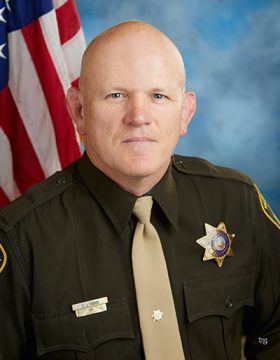
I have been a police officer since 1998. I know we need men and women who are capable of executing at a high level, even on calls for service in the field. Men like this throughout my career are almost an after-thought, like they are just waiting for the "in emergency break glass" and go. Like they "rose to the occasion."
They didn't…
They trained, rehearsed, performed actual missions, and consistently put in the work so that when a suspect's actions demanded a warrior, one came through the door.
Over the years, the idea of officers being warriors has been frowned upon. I wrote about this in a previous article titled Warrior versus Guardian. In it, I make several points.
This idea that a warrior mentality causes inappropriate, out-of-policy, or unlawful uses of force has crept into the law enforcement community and at times gets promoted by officers in upper-level staff positions. In response, there has been a movement by staff to say they need officers to be "guardians" and not "warriors."
This is ironic to me when you consider where I believe some of the blame or poor uses of force actually belongs. Some blame rests with those who lead agencies and provide very little training to those who go in harm's way.
The first issue I have with this movement is the idea that officers will somehow use force more appropriately if they think of themselves as guardians rather than warriors. There is a HUGE misconception that videos of unlawful beatings are videos of warriors in action. In addition, the inference that if officers had been "taught" they were guardians rather than warriors, somehow the force would have been appropriate is completely false.
The truth is these officers are not warriors, nor are they well trained. What we are actually seeing in almost every video that depicts poor force applications or poor force decisions is a poorly trained officer attempting to make critical decisions under stress and elevated heart rates.
We are not watching a highly trained "warrior" aggressively smashing random suspects. We are watching equipped officers with badges, gun belts, academy training, and limited annual training trying to manage violent encounters. Their equipment and authority do not make them warriors. "Warrior" status, if such a thing exists, can only be achieved through countless hours of training and experience.
What we see in these videos is force being deployed by officers who are not "great at it." Shoot, they are not even good at it. We are not watching warriors. We are watching ineffective force applied by poorly trained officers.
So what makes someone a warrior? One answer is that "the warrior has mastered himself in body and mind. His power is rooted in self-control. He knows when to be aggressive and how aggressive to be."
How does the warrior achieve that mastery? Through diligent, consistent, ongoing, and strenuous training, coupled with real-world application.
Most officers neither receive nor seek out that level training. Even if a so-called "warrior culture" were being infused into police departments across the U.S., exactly when and where is this happening?
I have been teaching police defensive tactics and use-of-force courses to departments around the nation and at national and international conferences since 2006. The majority of officers and departments nationwide provide 10 hours or less of defensive tactics and use-of-force training annually. Less than 10 hours per year.
Exactly when and how are these "warriors" being developed? I think civilians, even those who complain about "warrior culture," would be shocked to learn how little training resembling warrior development actually occurs in police departments nationwide.
Many departments don't allow meaningful contact during combatives training because they fear injuries. Very few physically tax officers, elevate their heart rates to realistic levels, and then require them to fight through that stress while making sound force decisions.
Training like that would actually develop many of the warrior attributes discussed throughout this piece, and communities around the U.S. would be better served because of it.
The favored word among many police administrators is "guardian." I sought out a dictionary definition for the word guardian as well. It is one that guards. A custodian. One who has the care of the person and property of another.
Certainly officers serve as guardians from time to time, but to suggest that performing those duties under the threat of violence while I say I am a guardian as opposed to a warrior somehow makes force more "pure" or appropriate in some way is laughable.
Ultimately, I don't care whether you call an officer a warrior or guardian. Neither title will produce effective, ethical, and lawful force.
What produces high-level performance is continuing, consistent, ongoing training and experience.
The result, over time, could be called a warrior, a guardian, whatever you prefer. Regardless of the label, you will produce professionals – professionals who are experts at using force when it is necessary.
I once saw a quote that captures this idea perfectly: "Violence is a last resort, but I am great at it."
If you are a professional police officer, you must possess the capability to use force and violence ethically and effectively. To me, anyone who can do that embodies the definition of a warrior.
The truth is that if you are a civilian, there is a good chance you have never met anyone who has reached warrior status as it relates to the ethical, lawful, and effective use of force. If you are an officer, you have probably been blessed to meet a couple.
If you are an officer, your status as one (you completed an academy, they gave you a badge and gun, you do your "annual" training) is not confirmed or verified. MOST officers fall into this category.
If people are concerned that officers are "becoming warriors" and believe that is a bad thing, they can rest easy. There are very few true warriors in the world, and most officers will never reach that level.
In fact, without dedicated, ongoing, focused, and consistent training, you will not reach that status. I know I have been training consistently for over 20 years, and I am still a work in progress. By Heraclitus' thinking, I believe I may be one of the nine, but I am not the one, although I have been blessed to work with a few. We certainly don't have a warrior epidemic in policing, but we would be better off if we did.
The issue we do have is ineffective force applied by poorly trained officers.
Ineffective force creates the illusion of excessive force. Many folks see that illusion and jump to the conclusion that a "warrior culture" is responsible for what they are watching.
The truth is there are no warriors in those videos. They are watching beginners at the use of force who rely on gadgets and tools to compensate for a lack of training.
Long ago, Heraclitus understood how rare warriors actually are:
"Out Of Every One Hundred Men, Ten Shouldn't Even Be There. Eighty Are Just Targets, Nine Are Real Fighters, And We Are Lucky To Have Them, For They Make The Battle. Ah, But The One, The One Is A Warrior, And He Will Bring The Others Back."
In this passage, Heraclitus correctly points out that warriors are rare. He figures potentially one out of every 100 men. He also correctly states the warrior's purpose, which is to bring all the others back. In our society, when the warrior is needed, it is to keep all the others safe and bring them home alive.
Throughout my career, the people who have led the anti-warrior sentiment have been politicians, political groups, and police administrators. On the law enforcement side, the brass that attacks the warrior ethos are chiefs who are appointed by political groups.
Many of these same groups are anti-law-enforcement, and the chiefs are political pawns in this game. Elected sheriffs are often more likely to do their own agenda as they are elected and do not serve at the whim of a mayor or city government.
The vast majority of brass have not honed personal skill sets and are physically incapable to do the things they expect others to do. In general, they don't like the warrior…until they need him.
Who loves the warrior? Only those who need him. Chiefs will even refer to officers responding to an active shooter event as a "protector" who must be prepared to meet violence with "controlled aggression." The men who ultimately stopped the shooter in Uvalde were warriors doing warrior things.
Who loves the warrior?
Not those he has fought for, for those he has fought for have seen the stains of battle on his garment. They draw back when they learn of the deeds he has done to keep them safe.
It is better for them to keep a distance from the warrior so the stain will not spoil the perception of their dignity. Yet the warrior continues to give his all. He must fight the battles to keep those souls he loves free from harm and free from the stain of evil, for he is a warrior, the only shield between good and evil. It is only the warrior that loves the warrior.
— Sergeant Lonn Sweeney, Portland Police Bureau, Portland, Oregon (quoted by the author to close the piece)